
Mars Attacks
In defence of myself, Graham Hancock and open-mindedness

Just over a quarter of a century ago my name was plastered on posters in the windows of bookshops from Edinburgh to London. I had written a book the fantastical and earth-shattering contents of which, it had been mooted during the pre-release build-up, would be released to the public at a live-broadcast press conference at the Royal Observatory in Greenwich. The book would be serialised (by yours truly) in the week before publication in the Daily Mail… a popular (for some reason) British tabloid…
I was billed as co-author with none other than Graham Hancock, alternative archaeologist, author of the million-plus selling ‘Fingerprints of the Gods’, and his colleague Robert Bauval, the man who had come up with the Orion-correlation theory concerning the Pyramids of Giza. These were the mystery dream-team, and I had joined their ranks.
I was going to be famous…
So why have you never heard of me?
Recently Graham Hancock has been much in the public eye, mostly as host of Netflix’s ‘Ancient Apocalypse’, its most watched non-fiction program ever – but also because of claims made that he is both a fraud and racist, charges against which he sought to defend himself on the world’s biggest podcast, the Joe Rogan experience, a few months back. It was a charge against which he defended himself well (and rightly so), despite some underhand tactics by the ‘establishment’ archaeologist who had made these baseless claims. For those interested, the ‘De-Dunking’ channel on Youtube (https://www.youtube.com/@DeDunking) has admirably begun the exposure of the underhand tactics used on this occasion.
Yet following the ‘debate’ between Hancock and the archaeologist in question (Flint Dibble), Hancock’s name appeared all over the internet in derogatory terms. Mostly he was called a grifter, a money-making hack, a snake-oil salesman peddling hooky goods for a swift buck. He even, they said, once wrote a book about (snigger) life on Mars…
You what?! I hear you say.
Yes - Flash back 25 years, and my, our, book is out; it is indeed this much derided and risible book about Mars - The Mars Mystery – it is called, a play on the epic ‘Sirius Mystery’ by Robert Temple which had been a hit in the 70s….
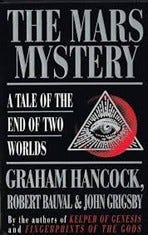
But this was no Von Däniken or Ancient Aliens clone.
This was the book that would catapult my career…
Yet fame was destined to elude me (thankfully, I say now as a 53 year old – life is hard enough without that) … the Greenwich press-conference never happened, and the book was a depressing damp squib, but not for any reason you might initially presume. It was still a bestseller (well, a No 1 bestseller in the Book Track industry charts, and No 2 in the Sunday Times bestseller lists), but the whole affair was somewhat of a debacle, more or less because an unhappy accident of chance pulled the rug from under our feet in the last moments…
And despite its ignominious end, it’s still a whopper of a tale – not a word a lie will be spoken here – yet in this little account of my past, written partly to amuse, partly to explain, there will all kinds of unbelievable incidents - clandestine meetings with a CIA trained psychic spy who had photographs of UFOs in his suitcase - of tapped phones; of threats of decapitation and urination down severed necks (not mine, I’m pleased to say) - tense interviews with NASA officials - suggestions of being part of 12-strong chosen group of hermetic ritualists tasked with restoring the capstone on the Great Pyramid on the eve of the New Millenium (yep, no word of a lie, as promised) - and even accusations of being in league with a troop of alien Egyptian gods known as ‘The Nine’ (you couldn’t make this up). The last two accusations remain in print for anyone to check… And oh how I wish that last one was true, I’d love to hang out with Thoth and Anubis.
This was my x-files moment, much to my amusement and surprise… I was a boy, really, of 26 years, thrown into a world of spies, UFOs, sleeping-prophets, and stargates.
So what was my role in this debacle? And what are my thoughts on the accusations of ‘grifting’ thrown at Graham Hancock? I, who achieved no fame at all from this episode, just, as Graham had warned me; just guilt by association.
This guilt needs mentioning early on. Any associations with a man whose theories were ridiculed by the archaeological establishment were not to be drawn attention to as I continued my later archaeological career. When I studied for my PhD in archaeology a few years back, I made sure to make no mention of the fact that I had not only been a researcher for, but also written a book with archaeology’s ’public enemy number one’. I knew where such association led. This was not embarrassment, or tail-turning – it was basic survival in my career. Yet I soon realised that a number of people who now work within archaeology had had their initial interest in the subject sparked by Graham’s books. I didn’t lie about my past, I just didn’t bring it up unless it was brought up first.
Yet its effects were still present.
For instance, in the years since The Mars Mystery I’d written two solo books on myth, one on the Celtic origins of the Grail legend and another on the Anglo-Saxon poem Beowulf. A few years after penning the second I found an online review that was initially positive until the reviewer had realised I was THAT John Grigsby. The book, therefore, was now deemed total and utter shit. The book would not be judged on its merits, but on the fact I’d once written a book about Mars... with you know who…
This, obviously, is bias. It’s judging a book by its cover. It’s not judging work on its own merit, but based on some smirking sense of superiority.
But the truth is although I’d not proclaimed the association with Hancock from the rooftops, knowing how it would have been received, more and more as I looked back on those times I did so with fondness and wonder. It was part of my biography, an exciting and interesting period in my life. Interesting didn’t cover it…
This is part of the story of how that came about, and the truth behind what many see as Hancock’s most shameful endeavour. And how I no longer feel like there’s anything to hide.
This is a defence both of that book, The Mars Mystery, and of Graham Hancock; it is probably the most misunderstood of all his books, so much so that I know he has a real regret over writing it – yet it has to be seen in context, as both an example of analogy (it is the ultimate allegory, used to illustrate a possible scenario) and an example of the power of marketing the publishing world had at the end of the 90s – books were a big deal then. Today just doesn’t compare. And it is also the story of my own naivety and prejudice, that I can only see now looking back as a fifty-plus year old man, kicking himself, like Parzival at the Grail temple, for not asking the right questions – for my own scepticism.
As for the Mars stuff, I’m still not really sure how it got on Hancock’s radar.
The background revolves around the early NASA exploration of Mars and of certain anomalies that were apparently viewed there – but how this came to be linked to archaeological sites on earth is beyond me. It was probably to do with high-up officials in the space industry also being behind the development of new technology (remote scanning etc) to explore terrestrial areas, and with the interests of these individuals in both our past and our future. But more of them anon.
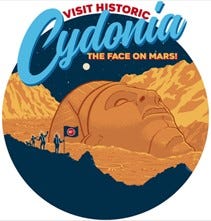
The mystery of Mars we wrote of in our book initially concerned the search for possible extraterrestrial life – a hot topic in the 90s, when, if you remember the ‘Martian meteorite’ with possible bacterial fossils was news headlines. This might seem avant-garde enough, but there was more… For in the 70s, on the high plains of the Cydonia region of Mars, NASA probes had snapped images of strange features, including what had looked like a face (!), a 5-sided pyramid, and a number of other anomalous structures, with weirdly unnatural looking angles and features.
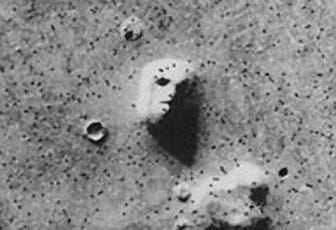
It was an odd landscape by any reckoning – but was the face just mere pareidolia – ‘Jesus in a tortilla’ as we named one of our chapters? This was the most-likely scenario. So what, then, had prompted Graham and Orion Mystery writer Robert Bauval to write a book on this kooky topic?
Following a highly-successful pairing up on a book named ‘Keeper of Genesis’– a book about re-dating the age of the Sphinx (called ‘Message of the Sphinx’ in the States) the pair had a number of new projects planned. One concerned clandestine archaeological work that had apparently been planned at Giza, and the involvement in this of parties also interested in the extraterrestrial question, specifically connections to Mars. It sounded nuts, but with his journalistic background this was something that sparked Graham’s interest, as well as his sense of fair-play – for it seemed these clandestine goings-on in Egypt sought to keep the truth from the general public.
The Mars connection, then, offered two elements to the future book – one, it would illustrate the involvement of high-tech, loaded, and therefore powerful people behind the scenes possibly influencing archaeological work in Egypt, who, as we’ll see, had a pretty way-out agenda – to find the ‘Hall of Records’ of lost Atlantis – and secondly, Mars, which once had an atmosphere and possibly could have harboured life before being hit (in all probability) by a comet, could be used as an example of how similar cometary impacts may have ended previous civilizations on earth.
However, Penguin, the publisher, decided that the larger work in which the Mars material was just a few chapters, could be split, and the Mars material expanded and published as a separate entity.
All this was unknown to me when I stumbled into a Waterstone’s bookshop in Canterbury in 1996, having read some of Hancock’s books, to attend a talk by him and Robert on their Sphinx book. I had written Graham an essay on Celtic myth and how it supported some of his ideas, which I handed to him after the talk. Six weeks later I got a phone call from him offering me some research work, which I happily accepted.
A year later Bauval fell ill (temporarily, thank god), just half a year before submission date of the Mars book; Graham was busy writing what would become ‘Heaven’s Mirror’, and I, who had been taken on by Graham to research the latter, found myself asked to help them out of a spot and write Robert’s part of the Mars book. This was the most out-there part of the book – dealing with some Martian anomalies, while Graham concentrated on the question of cometary impacts.
But not only would I need to write what was half a book with a bestselling author – I also had to do some pretty vital legwork… I needed to speak to the main players, to people at NASA and Jet propulsion Laboratory in LA. This necessitated a trip to the States to do some pretty in-depth research…
It was at this point that Graham wisely asked me to consider my co-authorship very carefully. This might very well negatively affect my standing in the archaeological world, he said. I thought about it for less than a second. I was 26. I would have been an idiot to turn down this once in a lifetime opportunity.
But Graham was right, though I don’t regret saying yes.
I’ll admit it – I was already a bit of an out-there thinker. Bauval used to say the mind was like a parachute – it only works when it’s open. I considered myself open minded. But I probably wasn’t open minded enough, to be fair.
Concerning the so-called ‘Face’ on Mars, I wasn’t unaware of its existence. In fact I’d once cut out and kept a picture of the face from a newspaper, God knows how old – probably sometime in the early 80s. And the more I investigated it for Hancock, the more intrigued I became. Okay, it was probably bollocks, but why did NASA lie and say the face was ‘a trick of light and shadow’ and say it had disappeared a few hours later? This just wasn’t true. Might it have been because they were hiding something? This was like a red rag to a bull. I was intrigued.
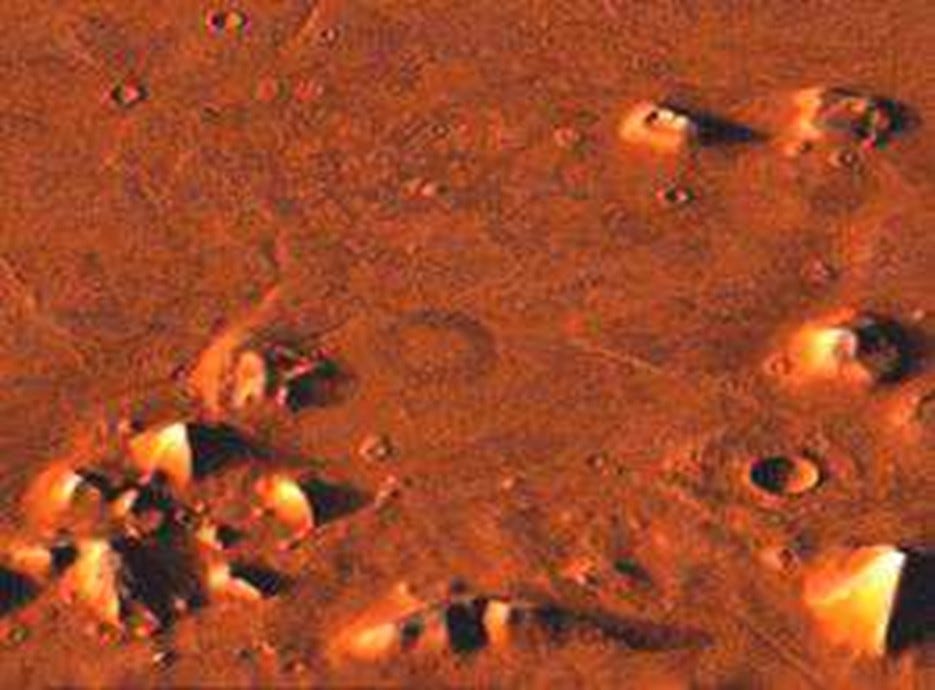
I talked in person to men such as computer-image analyst Mark Carlotto (his is the image, above), and Professor Stan McDaniel – good, open-minded, interesting men whose computer and statistical analysis of these Martian surface features raised enough probability of artificiality to make one stop and think.
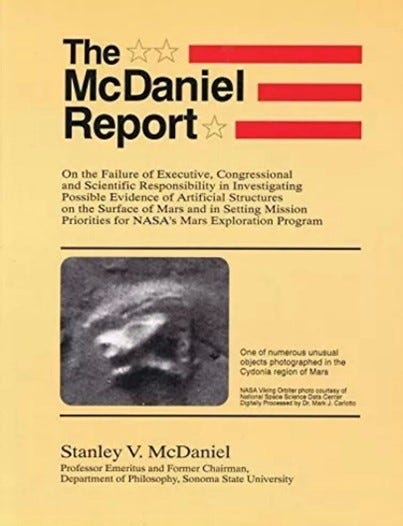
We had a duty to consider the possibility. We couldn’t just dismiss this out of hand because aliens and UFOs and all that was ‘just horseshit’ (this was the 90s – the X-files were hot stuff but no serious academic would even consider the possibility). But we had to be scientific. And being scientific meant questioning – not running from the topic screaming.
We had no choice. These men of science had raised the possibility so we had to look.
We also had to look because of the other people mentioned earlier who were taking this very seriously - these people were somehow connected to the Giza plateau – and that was worrying. It might sound like bull, but a number of big-players in Egypt in the 90s were connected to a cabal of organisations in the States associated with the secret services, NASA and other clandestine organisations. The Edgar Cayce foundation, an organisation that promulgated the theories of the so-called ‘sleeping prophet’ Edgar Cayce, had many fingers in that particular pie, including having financially supported the careers of some of the Egyptologists high-up at Giza, such as Mark Lerner. The head of the organisation, one Joe Schor was heavily involved in trying to prove the visions of the sleeping prophet that had suggested that the ‘Hall of Records’ of the lost civilization of Atlantis lay under the Sphinx. All these new technologies to remote-sense such hard-to-reach places were available to these people. But should this place, so important to human history, be being explored clandestinely by quasi-mystical institutions? Graham and Robert had a vested intellectual interest in work going on at the plateau – yet had been told in no uncertain terms that if they turned up there again Zahi Hawass, the head of the Giza site, would rip off their heads and piss down their necks (a rift since mended). Both Graham and Robert felt a public duty to spread this fact and alert the populace to the possibility that secret work might be going on, of which they weren’t being told – and that there was a chance that any findings would not be made public. It seemed nuts to us that control of an archaeological site might be in the hands of such a group with such an agenda, and that they might already be digging under the Sphinx in search for Cayce’s Hall of Records – his prophecy had stated that it would be found before the end of the Millenium…so time was running out for those wishing to prove him correct.
It was the work of this secret cabal of institutions that had initially, so it seemed, made the links between Giza and Mars. I’m not sure when – possibly during the days of ‘psychic spying’ when programs of ‘remote viewing’ were undertaken at Standford in the 60’s– and apparently individuals had glimpsed ‘pyramids on Mars’ long before Viking had snapped images of the ‘face’ and ‘pyramid’. Someone somewhere had put two and two together and linked the Giza pyramids to the Martian ones… hey presto – a connection and a conspiracy were born, and 30 years later that initial link, albeit tentative at best, was resulting in secret work going on in Egypt.
Time was running out. What if they had already been looking? Was it likely that such results would be publicly broadcast? We thought not.
It also seemed unlikely the Face on Mars would ever be rephotographed. A NASA mission was underway but the face was not on the agenda. Why not, we asked? It was anomalous, so why not just take a peek? What was there to lose? Or was the plan to photograph the Face but not publicise the images?
We felt a kind of crusading spirit in uncovering the hidden agenda in Egypt, and possibly in NASA, too…
Did we believe Mars had been inhabited? Probably not, but in my more romantic moments I did personally wonder. Did I think it had any connection to Egypt? No. But that wasn’t the point – the question was whether someone else believed this, and whether they were holding the keys to the work going on at the Giza plateau – that was much more important. Did we believe Mars had been hit by a comet? Yes, and that potentially a civilization had been lost? It was possible, and therefore suggested both an ongoing danger to our own current civilization, and the possibility it had already happened in the past, perhaps many times.
As I stated above, Graham was formulating a possibility of a cometary impact ending past civilizations, like that which had ended the reign of the dinosaurs, as a likely alternative to the ‘global crust displacement theory’ he had put forward in his ‘Fingerprints of the Gods’. Mars offered a very close-by and alarming example of this mechanism and its effects – that planets could and did get hit and be rendered utterly inhospitable to life. It was a warning from history. And in the book Graham would beg scientists to up their game and keep looking for possible Earth-killing comets wending their way towards us. The book was a call-to-arms.
We tried to keep an open mind throughout the writing, to all manner of new hypotheses. My mind was partially open. What I failed to do was ask better questions...
For instance, when I met the man who claimed to have psychically remote-viewed pyramids on Mars (we were sitting on a bench in San Fransisco, overlooking Alcatraz as he told me this) my previous interest in Jung and the paranormal led half of me to think ‘how cool’, yet in the same breath the other half of me was secretly thinking, ‘Yeah yeah, right!’; I was a product of a Western scientific upbringing, and this seemed to win out over my open-mindedness. Later that day, over a Chinese meal in Chinatown he took from his case a series of photographs of Flying Saucers he had personally taken in Mexico. I was fascinated by UFOs as a kid, brought up on Close Encounters of the Third Kind, yet here, looking at photographic evidence, from a man whose veracity I didn’t doubt, I just didn’t believe them, and so didn’t really ask anything about them. Now I kick myself. The US government has more or less admitted to the existence of what it now terms UAPs. This would have been unthinkable in the 90s, and still has so much stigma attached to it that the announcement had largely gone unheeded. I was one of the most open minded people I knew, and yet even I baulked before these photos. I can’t even really remember what they showed (This isn’t my only brush with UFO research, and this is something I may return to – another wonderfully bizarre episode in my life, but much more recent).
J J Hurtak, the man in question, the remote-viewer and taker of these photographs, was convinced by the reality of alien life, and by the possibility of parallel evolution – that Mars had indeed been inhabited, and that there was a connection between our planets. I found it a wonderfully fascinating thought, yet in my more sober moments I couldn’t even consider it. Still, we pursued the possibility of such ideas knowing that others certainly seemed to believe them, and that their beliefs had serious possible ramifications for archaeology. The purse-strings of Egyptology were being held tight by people with such an agenda. And we were the journalists who would expose them, would pull the masks from their faces like some Scooby Doo villain.
But we became very suspicious, and it didn’t endear us to many people.
Bauval warned me that we were dealing with people with money and power, with the CIA and NASA, and other hidden organelles behind even these. ‘Don’t be surprised if your phone is tapped’, he said. I howled with laughter. The CIA were not about to tap my phone.
About six months later, one night in my remote rural cottage, me and my then-partner discussed selling my present old car, agreeing a price, and deciding to list it the next day in a local paper. The next morning we went out shopping, and when we got back there was a message left on my answering machine. Someone wanted the car. Great. Except we hadn’t listed it yet; we hadn’t even discussed it outside of the house. My partner phoned the guy who had left the message back and asked how he knew about the car. Apparently I had told his Dad about it the day before, in Canterbury. Hours before I’d in fact decided to sell it…. The truth was I hadn’t been in Canterbury the day before. The whole tale was complete bullshit. I decided to ring him back myself and ask more questions. Who was his Dad etc? When I asked him the name of his Dad he hung up. When I tried to ring the number again it didn’t work, and it never would do again.
This was either a complete and weird coincidence – that his Dad knew another, different, John Grigsby, just happening to be selling his gold mini-metro for £500 and had rung my unlisted number by mistake (himself using a number that just happened to then be cut off within a few minutes of me speaking to him) or – it meant not just my phone, but my house had been tapped. The conversation with my partner was in bed. To what end? I don’t know. Would they have bought my car and struck up a conversation in order to get information out of me? It was an old banger so good luck to them. By asking questions did they realise they’d been rumbled and cut the line? And who the hell were they? Or was this one of John Keel’s weird paranormal cases like he describes in the Mothman Prophecies where he got knowledgeable phone calls from strange entities. I began to wonder whether I had a doppelganger wondering about trying to sell my goods from under me.
It's no wonder we all became a bit suspicious and paranoid, But we tried to stay as objective as possible. When Mike Malin, the imaging specialist working for JPL seemed to be deliberately avoiding taking photos of Cydonia it seemed like a conspiracy to us on first view, but in reality we realised that he just didn’t think it was worth it; when we did communicate with him we came to that conclusion that he was just an honest engineer, and that our previous ideas about this side of the conspiracy were false. But it’s easy to see why we had become so paranoid. No one had threatened to piss down my neck, yet the underlying threat of something, possibly violence or blackballing, seemed very real. We were three researchers with a suddenly worldwide voice, thanks to the success of Graham and Robert’s last few books, and we were also suddenly aware we might be treading on some very sensitive toes – if there really was a conspiracy, what the hell did we think would happen if we exposed it?
People have taken the piss out of Hancock for saying he’d risked his life to find traces of his lost civilization, but this isn’t just rhetoric. As well as spending hours personally exploring underwater sites, he’s also trodden on powerful toes – risking much. Some people just see the words ‘bestseller’ and think he’s just after the money, that he’s a grifter. They don’t see his journalistic integrity, his ceaseless quest for truth, that often has pushed him into ill health – and pushes him to expect resistance, and possibly fosters a vague sense of paranoia (that isn’t vague or paranoid in the case of very real attempts to quiet him by certain parts of academia); there are better and safer ways to make money if you can write as good as Graham can (come on, Fingerprints was a bloody good page-turner, as un-put-down-able as a Dan Brown thriller).
I remember author Robert Temple saying to me once that Graham hated the Mars Mystery, and I felt it like a blow. Not necessarily for myself, but for him.
I can see why he dislikes it. As I said, it had been intended as part of another book but the publisher had asked for it to be expanded into its own work, and Graham had said yes realising the possibility of using the cometary death of Mars as a model for the demise of his Ice Age civilization deserved its own volume. This, with the mounting evidence for a conspiracy made it seem fine as a standalone – but we knew it was risky and might label us cuckoo – yet we had to take a stand to research this, to be open minded, and to follow where it led.
But it was just too close to Von Däniken in people’s minds, and it tarred him with the same brush, even though he said it was a ‘what if…?’, a kind of thought experiment.
But the main blow to the book was the last minute decision by Mike Malin and NASA to photograph Cydonia after all. Suddenly the whole side of the book that argued NASA were deliberately not targeting the Face, a face they had lied about –vanished. Just as the book was going to press they decided to photograph it, and it came back looking like a natural feature, though some still say with anomalous components. No conspiracy, then, at least from NASA, and no face on Mars. Two major points we had concentrated on were shown to be invalid just weeks before the book hit the shelves.
The paperback would have the new images (see the picture below) and some discussion of them.
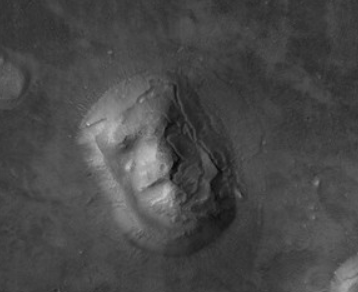
But we had no story; we had the comet story, and the clandestine work at Giza and machinations of the Edgar Cayce foundation, but it wasn’t as newsworthy as the planned expose. The comet stuff could have been a great appendix to Fingerprints, likewise the Giza conspiracy stuff an appendix to the Sphinx book- but with no Face, and no NASA obfuscation, the book didn’t hold up as an independent entity. Like a comet it crashed and burned.
In hindsight it should have been pulled. But the publishers had no desire to do that. The marketing machine was well under way. The hardback was already printed. And it was bound to sell, wasn’t it? The book was released to less than tumultuous praise. One paper called it a complete turkey. This was the 90s, and no one in their right mind actually believed in governments hiding secrets about UFOs, even though we now know this was indeed the case. I had penned a week of articles appearing in the Daily Mail – this was both fun to write and rather exciting to pop down the local paper shop and see my articles at the centre of a British tabloid.
Yet the rug had been pulled from under us with the release of the images, and despite a UK wide book tour (and another in the States with just Graham, as my name wasn’t to appear on the US edition) life settled down very quickly back to normality.
But we soon saw that the advance we had recieved would never be paid off. The book would never make any money.
It remains a rather embarrassing part of Graham’s CV, a book that missed the mark, was overly hyped and failed because the conspiracy it sought to unmask unmasked itself – at least in part.
I never became famous. Two years later I was working in a bookshop, on one occasion selling my own book to a member of the public, who, when telling them I’d written it, looked at me as an obvious bullshitter.
I hid it even from myself. I don’t even own a copy.
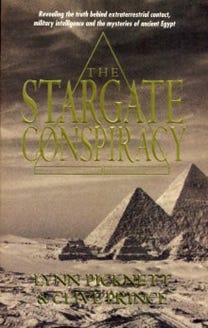
Although, unlike the Younger Dryas comet, the impact of the book was minimal, it was amusing to see the ideas within it being picked up among other authors. Others tried to make wild assertions based on not just its contents but also on us authors. One book, The Stargate Conspiracy, argued that the book was written itself as part of a secret agenda, on behalf of nine alien beings (the Nine)… who were, in fact, the gods of Ancient Egypt; this was laughable but also pretty cool, I thought. They pointed the finger largely at J J Hurtak in the book as behind this conspiracy. It amused me that they had no idea I’d actually met the guy and spoke about aliens and seen his pictures of UFOs. That would have given them food for thought. But they never contacted me to ask – which is why you really need to do your research folks….
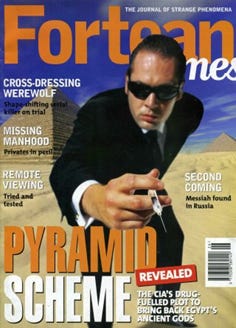
Next in a book named ‘Giza: the Truth’ (snigger) a trip to Egypt I’d been on was discussed as if it was some great masonic conspiracy, a set of rituals set to culminate in the replacing of the lost capstone (benben) on top of the Great Pyramid at midnight on the new Millennium. Apparently we (the ‘twelve’) had had a dry-run in 1998, when a group of us gathered in Giza, including Robert Temple, Colin Wilson, Michael Baigent, John Anthony West, Hancock and Bauval to sail down the Nile; strangely I thought I was just on holiday on a specialist author’s tour. There was another tour the next year - I, however, was not on the ‘guest list’ – had I been dropped from the ceremonies for some mysterious reason, the authors of Giza: The Truth asked? No, I simply couldn’t afford to go on holiday again that year, and was going to spend the millennium with my friends in the UK. There had been no falling out or exclusion from secret rites. I was not cast aside from the magical 12, nor the mystic divine Nine.
But perhaps they had a point…
Maybe The Nine, Twelve, or however bloody many, didn’t want me there… probably because I didn’t sell them my gold mini-metro.
I wasn’t famous, but I was at least infamous: I was a masonic ritual-enacting alien conspirator. I wonder if I should have put that on my CV?
It became an amusing memory for me, one to tell over a pint.
It gave me experience in writing and publishing, a glimpse into the industry. And I’d also become a bestselling author and realised it wasn’t all it was cracked up to be. That particular itch was scratched and I could move on and write what I wanted, not what I thought would sell.
But after the recent Joe Rogan debate, seeing Graham against the ropes being charged with all manner of false claims, I read that line about ‘grifting’ and I smarted. Perhaps no one else knew, but I knew, what that Mars book was really about – it may have been partly about making money for the publisher, but for Graham it was a chance to try to uncover some of the underhand politics at Giza while also seeking a mechanism, via the comet that hit Mars, with what happened to this ancient civilization that worldwide myths seemed to record. It was a chance to ask, ‘What if?’ and ‘How?’, a chance to be brave and to stick one’s neck out in pursuit of something we saw as worthy of study.
It may have been unwise, misjudged. How did we expect it to be taken seriously, when I myself, faced with a photograph of a UFO over a Chinese meal in San Francisco, couldn’t believe (despite wanting to). If I couldn’t swallow it, then how would anyone else? The book was reliant on the conspiracy remaining unmasked, on NASA continuing to lie and evade. So the moment they announced they would rephotograph the face, just weeks before the launch of the book, we poised ourselves for massive success or massive failure. If the image had come back as clearly intelligently made, the book would have gone stratospheric. No doubt about that. But if it came back as natural the book would instantly fail. We were poised on a knife edge.
It was akin to being told your whole financial future lay on the toss of a coin. In those days of snail’s-pace internet on the day of the images’ release it took literally hours for them to downloaded to my home computer from the NASA website. Slowly the new photographs revealed the sad fact – the tossed-coin had fallen … and it wasn’t a head…. tails, you lose.
When Graham told me to think carefully about joining the writing team, knowing it would leave a mark on me for the rest of my career, he was very perceptive. When we met up a few months back he asked if it had been much of a burden, and I had to say that yes, it had always been there in the background, a stick to beat me with. But I couldn’t say I regretted it because it had given me the adventure of a lifetime.
Now, once more, I’m putting my name beside Graham’s, if not on the cover of a book. And this too may direct flak my way. But seeing the way he has been criticised publicly I couldn’t stand quiet. This man is no grifter, he’s a searcher. He’s no charlatan or snake-oil salesman. He’s looked at myths and anomalies in the archaeological record and seen them as hints that there’s a previous civilization or level of culture that we’ve simply lost through time. This is why his book is called Fingerprints of the Gods – these are hints, traces, small clues that all is not as we might have been led to think. And so it’s simple for an archaeologist like Flint Dibble to say ‘where’s your evidence?’ knowing there’s simply no smoking gun just, as Graham says, fingerprints; hints; clues – enough to ask the questions – not enough, yet, to answer them. And I know it’s hard to open your mind to the possibility, and to scoff, and laugh, and feel embarrassed for anyone who might give even the slightest bit of credence. I know. I’ve been there. I’ve seen the photos of the UFO and snorted inwardly, only to find myself kicking myself 25 years later in this new era of disclosure. Who knows, in 2 years’ time the New York Times might publish an article telling us the Face was real after all. The book might have to be republished. God knows I could do with the royalties. But I’d eschew all those royalties just to go back to that bench opposite Alcatraz and that meal in Chinatown, and look closer at those photos and ask different questions.
I don’t for a second regret working with Graham Hancock, a man I consider to be a true and honest searcher after the truth, who warned me of the dangers of association. By agreeing to put my name alongside his I lay myself open for anyone to use this as a stick to beat me with.
It was, in effect, an inoculation against ever being treated seriously by academia. And as such it liberated me from ever treading that path. I’d never fear being blackballed because I wasn’t ever going to be welcome: Blackballing was an inevitability.
I’d never wanted to be a career man. I liked the idea of being a maverick.
However, every step I’ve taken in lecturing and writing since has been slightly shadowed by the expectation that at some point someone would pull The Mars Mystery from under their coat, and use it to discredit me. So I’m beating them to it.
I am John Grigsby, and I co-authored ‘The Mars Mystery’.
What a fascinating story! I remember coming across that review, saying you were THAT John Grigsby when I was looking for a copy of one of your books. My reaction then, as now, was "Wow! How cool!" It's sad that it's had such a lasting impact on your career, but I'm glad you're a maverick and I appreciate all your work and research. Your PhD has certainly had a lasting impact on mine. <3